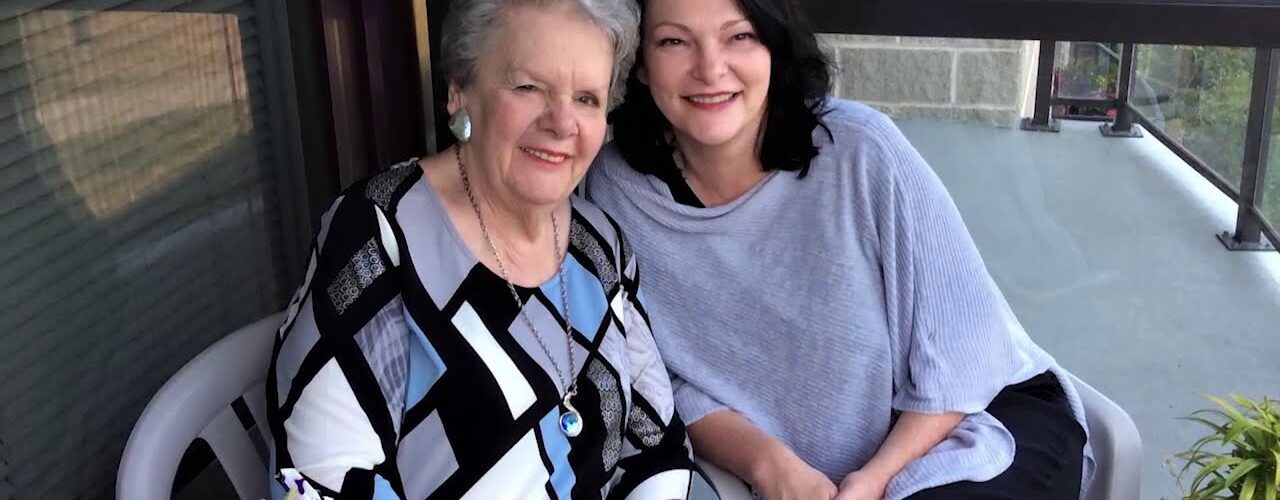

Mariette’s daughter explains …

My mother was diagnosed with Alzheimer’s in 2012, I believe.  And for us it meant really just dropping everything and trying to figure out what her needs were and to understand what the disease was.  I did receive a number of calls from strangers that she was lost or hungry. That’s the point when I decided that I had to take her in and try to figure out our options for her.  It was a devastating experience to leave a loved one behind when you don’t understand fully the disease.  I was losing her.  Her mind was deteriorating as I said, and I didn’t think she would last the year.  I didn’t think she was going to make it.  Shortly thereafter she did have a fall – a significant fall where she broke her neck and she ended up again in ICU in the hospital.  They repaired her neck. 

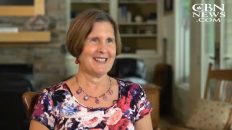
Mariette …

I wish I could remember because I have no pain.  I don’t remember having any pain.  Did I have a body?   Did I have a mind?  I don’t know.  I don’t remember anything. 

Caregiver …

She was in ICU attached to all these machines.  She had a breathing tube in and she had a neck collar on because she’d broken her neck.  Her face was just swollen almost beyond recognition.  And as I stood at her bedside and prayed for her I thought, I don’t think we’re going to see her back at the facility.  I remember praying at her bedside and just asking God for mercy in bringing her back.  It was a long journey, but then she came back.  And suddenly she was getting so much better and not just physically but also cognitively.

Interviewer …

Tell me why you think this is a miracle?

Mariette …

When I look today at the people with Alzheimer’s and think that I was like that, and I was even much worse than that because I went down to zero and they’re not the one I see.  They’re not down to zero.  And I say, there’s no way I could get out of that by myself – no way without intervention by God.  It has to be God.  It’s a miracle because nothing else would take me out of there.

Caregiver …

So it was really a miraculous change that none of us could even fathom.  And then, I mean, this never happens where residents in long-term care improve so much that the care staff are saying and the doctor – they can be in independent living now, you know.  And for her to move out, it’s usually the other way around – people moving from assisted or independent to long-term care.  But Mariette came the other way.

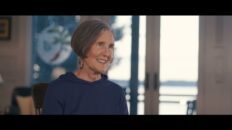
Mariette …

Because there’s so many Alzheimer’s patients I don’t know why I’m so different, you know.  I mean, why did God choose me to get better?  Maybe He wants me to give hope to people.

Caregiver …

I feel that prayer is a crucial piece of our work here.  It’s not just the chaplains praying.  This is what we see every day – the residents praying for each other, staff in housekeeping cleaning the rooms and then coming in and seeing that a resident is distressed or not feeling well or discouraged or grieving.  It’s a community of care, and prayer is at the heart of it.

Mariette …

How can I describe my God?  He’s everything, everything – the creator of everything.

Mariette’s daughter …

You know, we talk a lot about miracles and I do truly believe that because she’s my mom again.  She’s my mom.  It’s important to have her back because she wants to help people.  She wants to ensure that people understand what Alzheimer’s is, what dementia is.  Because honestly until you experience it, it’s hard to believe that this happens.  It’s hard to believe that somebody comes back from this.  So, yeah, it’s a miracle for sure – no question.

– – – – – – – – – – – – – – – – – – – – – – – – –

Is any disease too big for God to heal?  No!  God not only gives us supernatural faith for salvation, but that same faith for healing, peace, joy, and prosperity.  See more at sinsurvivor.com/healing.  

ALZsurvivor [home] > Healing from Alzheimer’s – Mariette McDonald

COVID-19 & ALZ connection (mask)

The TRUTH About Alzheimer’s Drugs . . .

Share It!

See more memes here.
Share 'em - help save lives!

Glossary


ALZ

abbreviation for Alzheimer’s Disease

Alzheimer’s Disease

a type of dementia and a progressive disease of the brain that slowly causes impairment in memory and cognitive function. Alzheimer’s disease happens when the brain tries to protect itself from three metabolic and toxic threats:

1 - Inflammation (from infection, diet or other causes)

2 - Decline and shortage of supportive nutrients, hormones and other brain-supporting molecules

3 - Toxic substances such as metals or biotoxins (poisons produced by microbes such as molds)


The protective response causes APP (Amyloid Precursor Protein, the long molecule that protrudes from neurons) to be cut into four fragments, including amyloid-beta, that downsize the neural network and eventually destroy synapses and neurons. When the APP molecule is cut into those four pieces, it is not cut into the two pieces that nourish and maintain synapses.

Alzheimer's disease is a state of the brain in which there is an imbalance between the reorganization of synapses that have outlived their usefulness (and which the brain can stand to lose - healthy destruction) and the maintenance or creation of existing and new synapses (which the brain needs to sustain old memories and form new ones, as well as perform other cognitive functions). That imbalance  comes from too many  of the synapse- and neuron-destroying quartet  of molecules snipped from APP and too few  of the synapse- and neuron-sustaining duo  of molecules snipped from APP.


ApoE4

abbreviation for apolipoprotein E, a gene variant (allele) which is a protein that carries lipids – i.e. fats. Carrying one ApoE4 (inherited from one parent) increases your lifetime risk of Alzheimer’s to 30 percent. Carrying two copies (from both parents) increases it to 50 to 90 percent. That compares to a risk of only about 9 percent in those who carry zero copies of this allele.

APP

abbreviation for Amyloid Precursor Protein, the long molecule that protrudes from neurons


Cognoscopy

metabolic and genetic testing that identifies cognitive decline or what may be putting you at risk for it

Dementia

umbrella term for a group of symptoms (a syndrome) without a definitive diagnosis. Dementia is a group of symptoms that affect mental cognitive tasks such as memory and reasoning. (Alzheimer’s Disease is the most common type of dementia.)

Early Alzheimer’s Disease

an early onset of Alzheimer’s Disease and uncommon form of dementia that typically affects those under the age of 65

Functional Medicine

a systems biology–based approach that focuses on identifying and addressing the root cause of disease

Heterozygous

carrying 1 copy of the ApoE4 genetic variant

Homozygous

carrying 2 copies of the ApoE4 genetic variant

Integrative Medicine

healing-oriented medicine that takes account of the whole person, including all aspects of lifestyle. It emphasizes the therapeutic relationship between practitioner and patient, is informed by evidence, and makes use of all appropriate therapies.

Ketoflex 12/3

anti-Alzheimer’s diet to include at least 12 hours of fasting, with the first 3 hours of that fast starting after dinner. It is largely plant based, but flexible as it does allow for small amounts of meat or fish.

MCI

Mild Cognitive Impairment

MCT oil

an abbreviation for medium chain triglyceride (a saturated fat) which is found in coconut oil.  Alzheimer's impairs the brain's ability to use sugar.  An MCT ketogenic diet offers an alternative energy source:  ketones.  This allows brain cells to survive better, blocking a receptor in the brain that causes memory loss.

SCI

Subjective Cognitive Impairment – a precursor to MCI (Mild Cognitive Impairment)

The Bredesen Protocol

treatment program developed by Dr. Dale E. Bredesen to prevent and reverse cognitive decline (also known as The ReCODE ProtocolTM)